
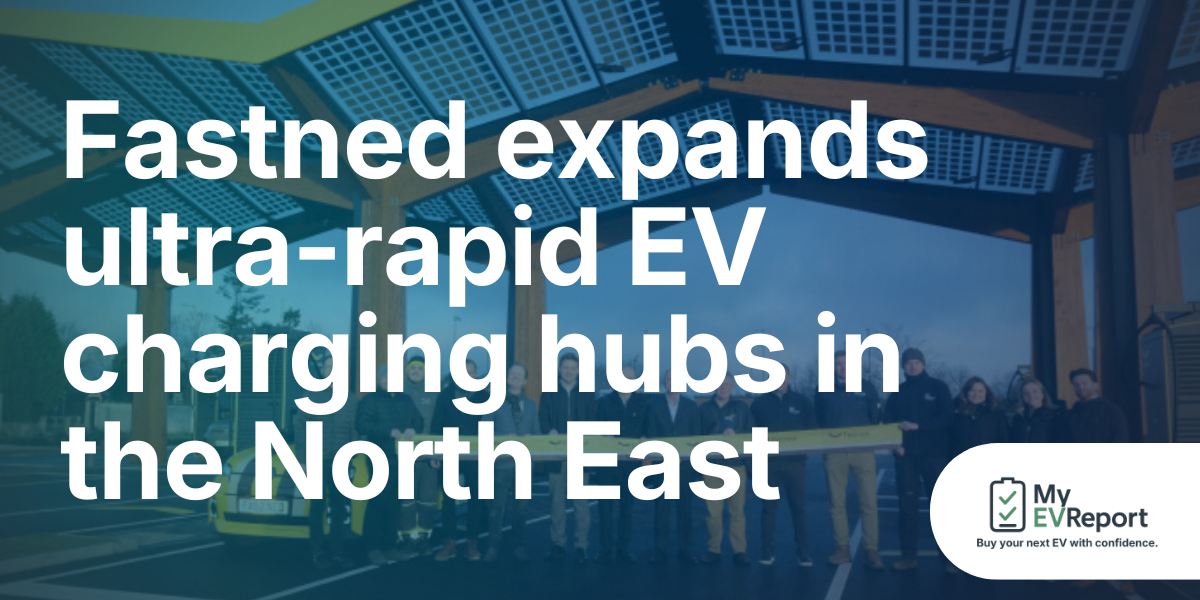
Fastned expands ultra-rapid EV charging hubs in the North East
The North East has gained two new ultra-rapid EV charging hubs from Fastned, adding higher-power capacity in a region where charging coverage has often felt uneven outside major routes. One site sits next to Callerton Parkway Metro station (one stop from Newcastle Airport), with a second hub on North Moor Road in Sunderland.
On paper, “more chargers” is always good news. In practice, what changes the day-to-day experience for drivers is where the chargers are, how many bays are available at each stop, and whether a site is set up to cope with peak demand. These new hubs are aimed squarely at that reality.
What’s opened, and where?
Fastned’s expansion is centred on two locations with very different types of use:
- Callerton Parkway (near Newcastle Airport): a larger “forecourt-style” site by the Metro station, positioned for airport traffic, taxi/private-hire use, business fleets and A1/A696 trips. It’s designed as a quick in-and-out stop, not a single-unit fallback.
- North Moor Road, Sunderland: a smaller hub that’s aimed more at local journeys and day-to-day charging — with food/coffee nearby, making it more usable for a planned stop rather than a last resort.
Why these two locations matter
Charging infrastructure is increasingly being built around journey patterns, not just map coverage. Callerton Parkway is effectively a “gateway” site: it sits close to a major airport and key road links, and is likely to see a mix of short, time-sensitive stops (drop-offs, pick-ups, taxis) and longer-distance drivers heading north/south.
Sunderland’s North Moor Road site is the opposite. These local hubs matter because not every charging need is a motorway run — plenty of EV driving is local, and the most frustrating gaps tend to appear when drivers need a dependable option close to home.
Capacity is the story (not just “a charger exists”)
The reason multi-bay hubs change the experience is simple: they reduce the chance that one fault, one occupied bay, or one slow session ruins the stop for everyone else. In the real world, the worst public charging experiences tend to involve:
- Turning up to find the only charger out of service
- Queues at peak times because a site only has one or two units
- Payment/app issues that turn a “10-minute stop” into a 30-minute problem
- Sites that are hard to access, poorly lit, or awkward to manoeuvre into
Purpose-built hubs are a response to those issues. They don’t guarantee perfection — but they are built to make problems rarer, and less disruptive when they do happen.
Ultra-rapid doesn’t always mean “fast” in practice
It’s worth separating site capability from real charging time. Ultra-rapid hubs can provide very high power, but how quickly a car adds range depends on its charging curve, battery temperature and state of charge.
That’s why dedicated hubs still matter even when charging speeds vary: having a reliable, well-sited stop reduces the stress of planning around charging time — especially on busier routes.
What this signals for the region
The broader point here is that infrastructure is moving from “early rollout” to “network building”. The next phase is less about placing single chargers everywhere, and more about creating repeatable, reliable hubs in the places people actually use.
The open question is whether hub-style growth can spread quickly enough beyond the best commercial sites — particularly into areas where grid upgrades, planning and utilisation make projects harder to deliver.
