
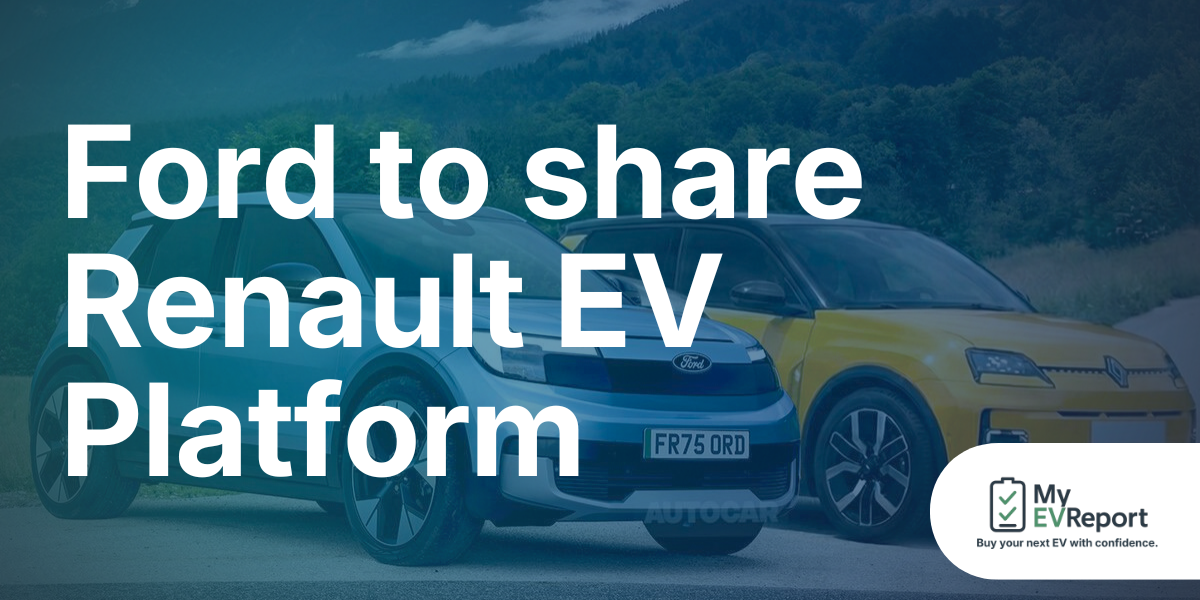
Ford has confirmed plans to return to the small-car market in Europe with a new electric hatchback that will effectively act as the Fiesta’s EV successor. Rather than developing the car from scratch, Ford will use Renault’s Ampere platform – the same underlying hardware that sits beneath the Renault 5 E-Tech electric.
Two new Ford-badged compact EVs are planned under the deal, with the first – widely expected to carry the Fiesta name – due to reach European showrooms around early 2028.
What has Ford actually announced?
Ford and Renault have agreed a platform- and manufacturing-sharing deal for Europe:
- Ford will launch two small electric cars based on Renault’s Ampere (AmpR Small) EV platform.
- Production will take place in northern France, alongside the Renault 5 and related models.
- The first car will be a small hatchback – a spiritual replacement for the Fiesta.
- A second model is expected to be a compact crossover or SUV, again using the same core hardware.
The goal is to deliver more affordable EVs for European buyers and to help Ford compete with lower-cost electric cars arriving from China, without the huge cost of developing an all-new platform on its own.
How is this linked to the Renault 5?
The key to the whole announcement is the Ampere / AmpR Small platform. This is the EV architecture that already underpins:
- Renault 5 E-Tech – a small electric hatchback with up to around 250 miles WLTP range.
- Renault 4 E-Tech – a compact crossover built on the same platform.
- Nissan Micra EV – another small hatchback for Europe using the same core hardware.
By tapping into this shared platform, Ford’s new Fiesta-sized EV should have broadly similar battery sizes, range and charging capability to those cars – though with Ford’s own exterior design, interior and suspension tuning.
Exact specifications haven’t been confirmed yet, but based on current Ampere-based cars, expect:
- Battery options in the region of 40–50 kWh.
- WLTP range likely between 200 and 250 miles, depending on version.
- DC rapid charging that should comfortably handle typical UK motorway stops.
Why is Ford doing this?
Ford has had a difficult few years in Europe. The company has:
- Ended production of the Fiesta and several other small cars.
- Faced pressure from cheaper Chinese-built EVs entering the market.
- Invested heavily in larger electric models like the Explorer and Capri.
Sharing Renault’s platform lets Ford get back into the affordable small-car segment much more quickly and cheaply than if it tried to build everything itself. Renault benefits from higher volumes on its platform; Ford gets a shortcut to proven EV hardware.
What could this mean for UK buyers?
It’s too early for confirmed prices or specs, but the broad shape of the car is clear enough:
- A Fiesta-sized hatchback – easy to park, familiar size for UK roads and city driving.
- Likely pitched as a more affordable EV than today’s family crossovers.
- Range aimed at everyday use – commuting, school runs, weekend trips – rather than ultra-long-distance driving.
- A choice of versions that may mirror Renault 5 line-up: lower-cost, smaller-battery models and higher-range options.
For drivers who’ve owned Fiestas in the past, this could end up being the most natural step into an EV – especially if Ford keeps the familiar “fun to drive” character that the Fiesta was known for.
How might it compare with the Renault 5 itself?
Because the two cars will share the same core platform, the main differences are likely to be:
- Design: Renault will lean heavily on retro styling; Ford may go for a more modern, “mini Puma” look.
- Interior feel: Different dashboards, software and interface design.
- Driving character: Ford is likely to tune steering and suspension to feel more like a classic Fiesta.
- Pricing and specs: Each brand will decide its own trim levels, equipment and finance offers.
For buyers, that means a choice between two cars that share a lot of invisible hardware but feel different to sit in and drive.
Battery health and used values – why it still matters
By the time the electric Fiesta arrives in 2028, we’ll also start to see the first wave of used Renault 5 and Nissan Micra EVs on the market. That will give buyers and dealers a much better picture of how the Ampere platform’s batteries hold up in real UK conditions.
As with today’s EVs, the long-term value of these small electric hatchbacks will depend heavily on battery State of Health (SoH):
- A stronger battery means more real-world range and a more attractive used car.
- Weaker batteries will limit range and could make some examples much less desirable.
That’s where independent battery health checks will continue to be important – especially as more mainstream buyers move into used EVs and want reassurance that a 6–8-year-old electric Fiesta or Renault 5 still has a healthy battery.
Key takeaways
- Ford is partnering with Renault to build two new compact EVs for Europe.
- The first will be a Fiesta-sized electric hatchback, due around 2028.
- It will sit on the same Ampere platform as the Renault 5, sharing much of its hidden hardware.
- Expect a focus on affordable pricing, everyday range and low running costs.
- Battery health will be a major factor in how well these cars hold their value in the used market.
We’ll update this article as Ford releases more concrete details on powertrains, range, pricing and UK availability.
